
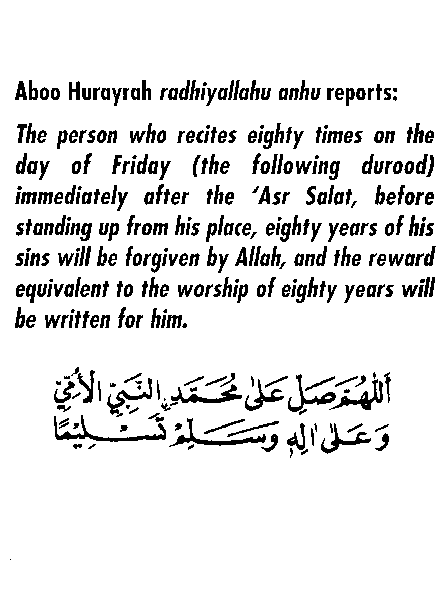
The Text of the Durood
Arabic Text
اَللّٰهُمَّ صَلِّ عَلٰی مُحَمَّدِ نِ النَّبِیِّ الْاُمِّیِّ وَ عَلٰی اٰلِهٖ وَ سَلِّمْ تَسْلِیْمًا
Transliteration
Allahumma Salle 'Alaa Muhammadinin Nabiyyil Ummiyyi wa-'Alaa Aalehi wa-sallim Tasleeyma.
Translation
"O Allah, bestow Your blessings upon the unlettered Prophet and upon his family; and bestow Your peace upon him and his family."
Aboo Hurayrah radhiyallahu anhu reports:
The person who recites eighty times on the day of Friday (the following durood) immediately after the 'Asr Salat, before standing up from his place, eighty years of his sins will be forgiven by Allah, and the reward equivalent to the worship of eighty years will be written for him.
درودِ
پاک کی فضیلت
درودِ
پاک کی فضیلت
اَربعینِ عطار،
قسط: 2، صفحہ: 35، حدیثِ پاک نمبر 35 ہے:
فرمانِ مصطفٰے
صَلَّی اللہُ عَلَیْہِ وَآلِہٖ وَسَلَّم:
مَنْ صَلَّی صَلَاةَ
الْعَصْرِ مِنْ یَّوْمِ الْجُمُعَةِ، فَقَالَ قَبْلَ اَنْ یَّقُوْمَ مِنْ
مَّقَامِہٖ: اَللّٰھُمَّ صَلِّ عَلٰی مُحَمَّدِۨ النَّبِیِّ الْاُمِّیِّ،
وَعَلٰی اٰلِہٖ وَصَحْبِہٖ وَ سَلِّمْ تَسْلِیْمًا- ثَمَانِیْنَ مَرَّةً
غُفِرَتْ لَہٗ ذُنُوْبُ ثَمَانِیْنَ عَامًا، وَکُتِبَتْ لَہٗ عِبَادَةُ
ثَمَانِیْنَ سَنَةً
جس نے جمعہ کے دن
نمازِ عصر ادا کی پھر اپنی جگہ سے اٹھنے سے پہلے 80 بار یہ درود شریف پڑھا
اَللّٰھُمَّ صَلِّ عَلٰی مُحَمَّدِۨ
النَّبِیِّ الْاُمِّیِّ، وَعَلٰی اٰلِہٖ وَصَحْبِہٖ وَ سَلِّمْ تَسْلِیْمًا،
تو اس کے 80 برس کے گناہ بخشے جاتے اور اس کے
لئے 80 سال کی عبادت لکھی جاتی ہے۔(1)
ایمان
والو! سن لو فضیلت درود کی | قربت حضور کی ہے محبت درود کی
کاسہ
عمل کا خالی تھا ایسا کرم ہوا | جنت میں لے گئی مجھے عادت درود کی
صَلُّوا عَلَى الْحَبِيْب! صَلَّى اللهُ عَلٰى مُحَمَّد
1...افضل الصلوات للنبهانی، صفحہ:25۔
The Friday Durood: Recited Eighty Times After 'Asr
The Narration
Source
This narration is reported on the authority of Aboo Hurayrah (radhiyallahu anhu), one of the most prolific narrators of Hadith among the companions of Prophet Muhammad (peace be upon him). Narrations attributed to him form a substantial portion of the Hadith corpus due to his close companionship with the Prophet and his dedication to preserving and transmitting his sayings.
The Reported Virtue
According to this narration, a person who recites the specified Durood eighty times on Friday, immediately after offering the 'Asr Salat and before standing up from his place, receives two rewards:
- Forgiveness of sins committed over a period of eighty years.
- A reward equivalent to eighty years of worship written in his record of good deeds.
This places the narration among a category of Hadith literature that promises exceptional reward for specific, time-bound acts of devotion — in this case, one tied to Friday, the most virtuous day of the week in Islamic tradition.
Breaking Down the Meaning
- "Allahumma Salle 'Alaa Muhammad" — This opening phrase directly addresses Allah and requests that blessings be sent upon Prophet Muhammad (peace be upon him), following the general pattern of Salawat found throughout Islamic devotional literature.
- "An-Nabiyyil Ummiyyi" (the Unlettered Prophet) — This title refers to a well-known description of the Prophet in Islamic tradition, signifying that he did not read or write. This characteristic is regarded by Muslims as significant evidence supporting the divine origin of the Quran, since it was conveyed through someone without formal literary training.
- "Wa-'Alaa Aalehi" (and upon his family) — As with most forms of Salawat, the blessing is extended beyond the Prophet himself to include his family, following the standard structure used in daily prayers (such as in Durood-e-Ibrahim recited in Salat).
- "Wa-sallim Tasleeyma" (and grant him peace) — The closing portion asks for peace to be bestowed, completing the traditional dual request of Salawat and Salaam that appears in most authentic forms of blessing upon the Prophet.
Timing and Method of Recitation
When to Recite
- Day: Friday, regarded as the best day of the week in Islamic teaching.
- Specific Time: Immediately after completing the 'Asr (afternoon) prayer.
- Condition: Before standing up or leaving one's place of prayer.
How Many Times
- The narration specifies eighty repetitions, corresponding symbolically to the eighty years of reward and forgiveness promised.
Points of Reflection
- Connection Between Number and Reward — The repetition of the Durood eighty times mirrors the eighty years of blessing described, a pattern common in devotional practices where the number of repetitions is linked symbolically to the promised reward.
- Emphasis on Friday — Friday holds a special status in Islamic practice, and many acts of worship — including extra Salawat — are especially encouraged on this day.
- Immediate Recitation After 'Asr — The specific timing, right after 'Asr and before leaving one's seat, reflects a broader theme in Islamic devotional culture of maximizing worship during specific windows considered spiritually significant.
A Note on Authenticity
As with many popularly circulated narrations promising specific numerical rewards for specific acts, it is worth noting that such Hadith are often found in later devotional compilations rather than the primary, rigorously authenticated collections (such as Sahih Bukhari or Sahih Muslim). Scholars vary in their assessment of the authenticity of narrations of this type. Regardless of the precise grading of this particular narration, the underlying practice of sending Salawat upon the Prophet is well-established and encouraged in the Quran and authentic Hadith. Those interested in relying on the specific reward mentioned here may wish to consult qualified scholars regarding the narration's chain of transmission and status.
Summary
This narration encourages the recitation of a specific Durood — praising the unlettered Prophet and his family — eighty times immediately after 'Asr prayer on Fridays, with the promise of extensive forgiveness and reward. It reflects a broader tradition within Islamic devotional practice of linking specific numbers, times, and texts of Salawat to spiritual benefit, while its ultimate practice, as with any narration of this kind, is best approached alongside guidance from knowledgeable scholars.

please give reference
ReplyDeleteSuhanAllah..
ReplyDeletePlease send us the book name where tthat is mentioned.it is for an Amal please help.
ReplyDeleteAlhamdulilah very useful doa plz continue dawah
ReplyDeleteSource? Is it a fake hadith!!!
ReplyDeletehttps://islamqa.info/en/answers/202162/how-sound-is-the-hadeeth-whoever-sends-blessings-upon-me-eighty-times-on-friday-his-sins-will-be-forgiven-for-eighty-years
DeleteSubhanllah
ReplyDeleteMashallah plzzz all Muslims this Dua starts today onwards plzzz
ReplyDeletePlease give reference from the book of hadith.
ReplyDeleteAl-Jami Al-Saghir; Allamah Sakhaawi RA in Al-Qawl al-Badee’; Imaam Daraqutni RA and Al Muassah al-Rayyan]
DeleteThis comment has been removed by the author.
ReplyDeleteMasha-allah
ReplyDeleteTrue
ReplyDeletehttps://islamqa.info/en/answers/202162/how-sound-is-the-hadeeth-whoever-sends-blessings-upon-me-eighty-times-on-friday-his-sins-will-be-forgiven-for-eighty-years
ReplyDelete